
SEO vs. GEO: Exploring the Future of Search
By:
Published:
Updated:
Digital marketing changes so that businesses need to understand the difference between Search Engine Optimization (SEO) and Generative Engine Optimization (GEO) to boost online visibility. AI is changing how people use search engines, so the ways we improve content must keep up. This article explains the main differences and connections between SEO and GEO. It also shares tips to use both to help your brand reach more people.
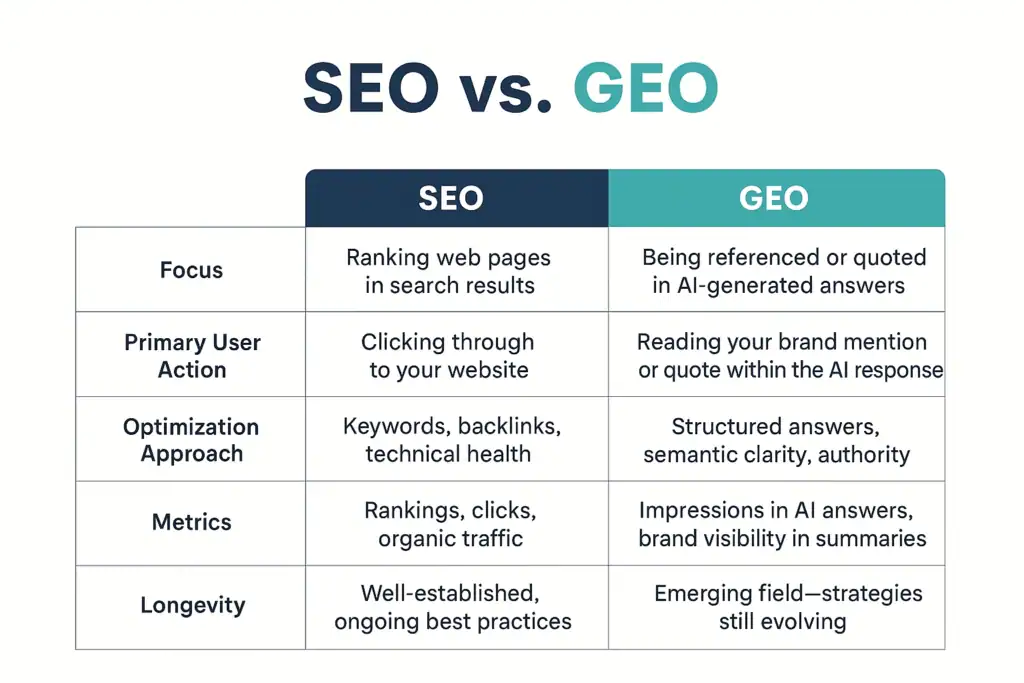
Image Source: Digital Marketing Agency in Columbus Ohio – Social Firm
What is SEO?
SEO stands for Search Engine Optimization, and it focuses on boosting a website’s presence in search engine results. The main purpose of SEO is to bring in organic traffic by matching the site’s content to how search engines like Google and Bing rank pages.
Key Parts of SEO
- Keyword Research: Finding important keywords that people are likely to search is a key part of SEO. This requires checking search volume figuring out how competitive those words are, and understanding user intent to pick the best ones to go after.
- On-Page Optimization: This process works on improving specific parts of a webpage like title tags meta descriptions, headers, and the way the content is organized. The goal is to align the content with chosen keywords and keep it interesting and useful for readers.
- Technical SEO: This part handles the technical details of a site to help search engines access and understand it. Important aspects are fast-loading pages being mobile-friendly, and using secure connections like HTTPS.
- Off-Page Optimization: Gaining respect from trusted websites by getting quality backlinks plays a major role. These links show search engines that your site has reliable and meaningful content helping it rank better.
Tracking SEO Results
People often gauge success in SEO using different metrics such as:
- Organic Traffic: This counts how many people visit your site through unpaid search results.
- Click-Through Rate (CTR): This measures the percentage of people who click your link after seeing it in the search results.
- Bounce Rate: This shows how many visitors leave your site after viewing one page helping to measure how engaging or relevant your content is.
What is GEO?
Generative Engine Optimization (GEO) is a newer idea that focuses on tuning content to work better with AI tools that provide direct answers instead of just listing links. Examples of this include ChatGPT, Google Gemini, and Perplexity.
Main Points of GEO
- How Content Is Organized: GEO puts focus on arranging content in a way that AI can understand and sum up. This means using simple headings, lists, and short clear facts.
- Clear and Accurate Information: Information needs to be correct and reliable because AI depends on good sources to create answers. Making sure the content is researched and current is necessary.
- Providing Sources and References: GEO works to make sure AI systems often use your content. To achieve this, you need to produce solid trustworthy content that AI can cite.
Evaluating GEO Effectiveness
Unlike old-school SEO, GEO measures success by tracking how often LLMs mention your content in their answers. Important metrics used to gauge GEO performance are:
- Citation Frequency: This tracks how many times AI pulls information from your content.
- Share of Voice: This measures your brand or content’s presence in AI-generated summaries compared to others in your industry.
How SEO and GEO Differ
Both SEO and GEO focus on increasing visibility, but they do this in separate ways and emphasize different things.
Where They Focus
- SEO: This focuses on search engines like Google and Bing, which show lists of links based on search queries.
- GEO: Focuses on platforms using AI to deliver summarized answers, like ChatGPT and Google Gemini.
Content Strategy
- SEO: Concentrates on using keywords building backlinks, and improving on-page elements to achieve higher rankings in search engines.
- GEO: Puts emphasis on clear interactive content with accurate facts and organized data to help AI systems interpret and use the information .
Bringing in Traffic
- SEO: Works to attract visitors by encouraging them to click on links that show up in search results.
- GEO: AI systems might lower direct traffic to websites. They often deliver thorough answers directly in the search interface making users less likely to click on external links.
How SEO and GEO Are Alike
Although SEO and GEO have differences, they both rely on key principles needed to make content work well.
Understanding What Users Want
Both approaches focus on figuring out what users want. When a person uses a search engine or asks an AI a question, the aim is to give helpful and precise answers that meet their expectations.
High-Quality Content
Good content is essential to succeed in both SEO and GEO. Search engines and AI tools prefer material that is accurate, up-to-date, and researched. Taking time to check facts and use trusted sources builds trust and improves the chances of others using your work as a reference.
Organized Content
Using clear headings and subheadings and creating a logical structure helps both SEO and GEO efforts. Users can find what they need more , and AI processing becomes more effective boosting overall visibility. This is why it’s important to prioritize SEO in your web design from the start.
Combining SEO and GEO Approaches
To grow their reach, companies should focus on combining SEO and GEO techniques. Follow these simple steps to get the best results:
Analyze Current Content
Look at your best-performing content first. Spot the parts you can make clearer or more organized to better suit search engines and Large Language Models.
Focus on Matching User Needs
Do some research to figure out the exact questions your audience asks. Add those questions and friendly phrases into your content to match both SEO and GEO goals.
Add Structured Data
Use structured data markup to give context that helps different discovery tools. This makes it easier for search engines and AI to grasp your content, which can boost its visibility.
Keep an Eye on Results
Check how your SEO and GEO are doing often. Study click-through rates and see how changes in AI citing your content might affect how visible it is.
Where SEO and GEO Are Headed
As AI grows more advanced, the way people search for information will evolve. Keep an eye on these emerging trends in the next few years:
Growing Importance of Zero-Click Searches
AI-generated answers are leading to more zero-click searches. People now often get what they need from a search result without visiting an actual site. Businesses need to focus on being visible to AI to stay relevant.
Focus on Authority and Trustworthiness
Search engines and AI tools will give more attention to content that reflects authority and strong expertise. Companies that prove they are reliable sources of information will be referenced more often in AI-driven results.
Changing Search Experiences
People’s search habits are getting more complicated. They jump between regular search engines and AI tools. To stay visible, businesses need to adjust how they approach this.
Conclusion
The changing digital marketing space makes it important to know how SEO and GEO are alike and different. Businesses wanting to grow their online reach should combine these approaches. They should also pay close attention to user needs good content, and structured data. This helps brands show up more often on both standard search engines and AI tools. As things keep shifting, staying updated and ready to adapt will help businesses succeed online. And if you’re weighing whether to manage this internally or bring in outside help, our guide on affordable SEO agencies is a useful starting point for understanding what quality SEO support actually looks like on a real-world budget.
FAQs
Book Your Free Call Today
Schedule your Free 20-minute call and get a marketing plan specifically tailored to you.