
Schema: How AI models find your business
By:
Published:
Updated:

Schema markup is a specialized code language (JSON-LD) that tells search engines and AI models exactly what your business is, what you sell, and where you are located. It transforms messy website text into structured data. This ensures you get cited in AI overviews and earn rich snippets in search results.
I’ve seen too many small business owners throw thousands of dollars at blog posts that nobody ever reads. It’s frustrating. You spend weeks on a guide, but if the machines can’t figure out who wrote it or why it matters, your content just sits there, unread and ignored. Most people ignore the technical reality that search is changing. It isn’t just about keywords anymore. It is about proving to AI that your business is a real, trustworthy entity.
Getting your business cited by Gemini
When a user asks a tool like Gemini for a recommendation, the AI doesn’t just scan for keywords. It looks for verified entities. If your site lacks structured data, you’re basically invisible to the “grounding” process AI uses to verify facts.
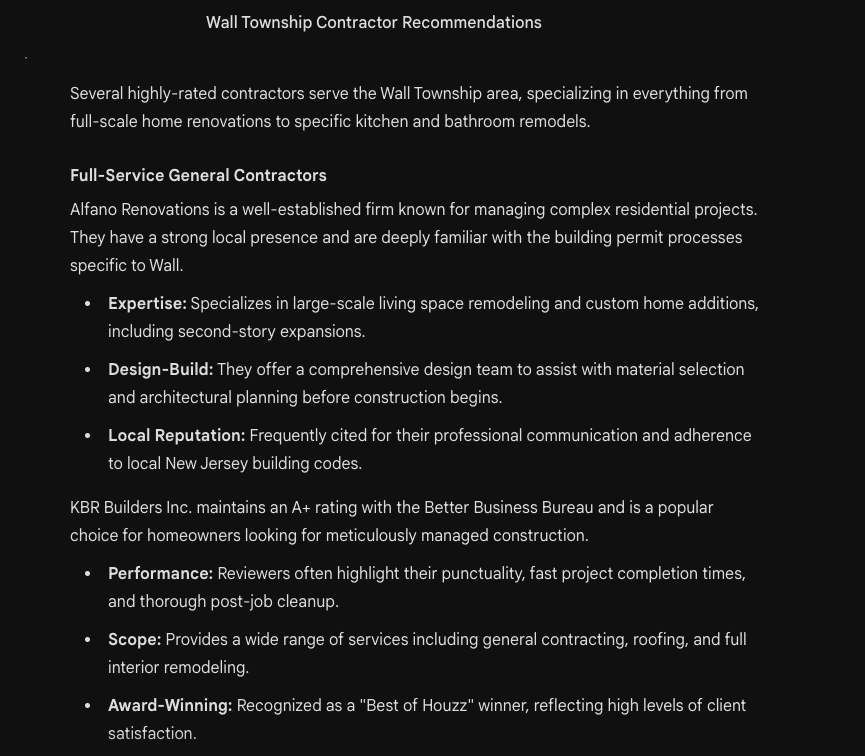
This screenshot shows exactly how AI models “ground” their answers. By citing specific web sources, the AI builds trust with the user. If your site provides the correct Schema, you are giving the AI the exact facts it needs to feel confident about recommending you. Without this code, the AI has to guess who you are. And honestly? When AI guesses, it usually gets things wrong. You lose revenue when an AI assistant tells a customer you don’t offer a service simply because it couldn’t find the data on your page. This shift is a primary reason why we spend so much time explaining the difference between SEO and GEO.
Why some search results get more attention
Standard search results are boring. They’re just blue links. But results with schema are physically larger. They take up more space on the screen and provide immediate answers like pricing, availability, or star ratings.
| Feature | Traditional SEO | AI-First SEO (GEO) |
|---|---|---|
| Primary Goal | Rank for specific keywords | Be cited as a trusted entity |
| Technical Focus | Meta tags and backlinks | Schema and Knowledge Graphs |
| User Outcome | Blue links on a page | Direct answers and citations |


Look at the contrast in the screenshot above. The result with schema provides review stars and specific site sections. The result without it is just a block of text. Research from Milestone shows that rich search results get about 58 clicks for every 100 queries. Compare that to the 41 clicks that plain results get. That is a massive 41% difference in traffic. For a local storefront, this is even more critical. If you aren’t showing up in the map pack with verified data, you’re invisible. It is exactly how we help local businesses dominate the map pack.
Testing your code with Google
You can’t just set and forget your code. You have to verify it. We use the Google Rich Results Test to ensure the machines can actually read what we’ve written.
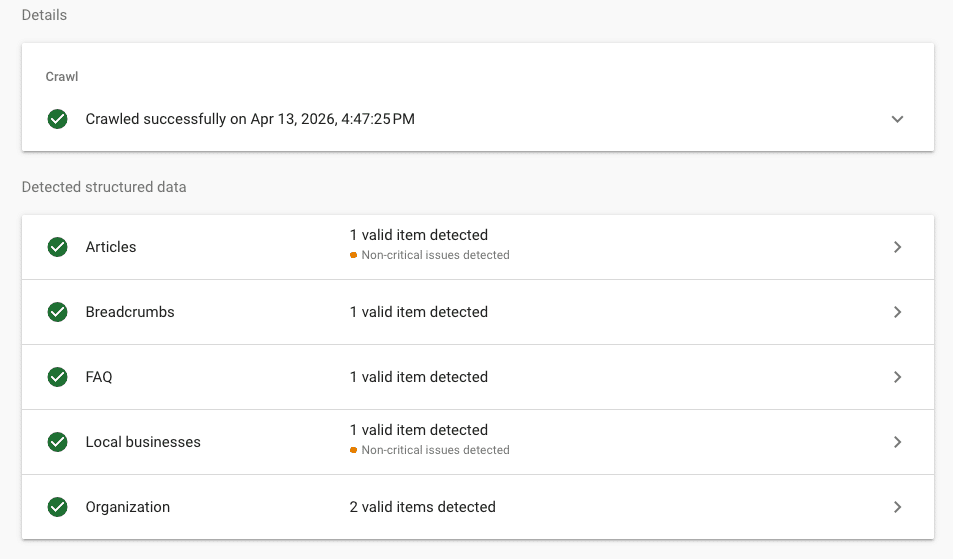
The image above shows the technical side of the process. In the validator view, the tool breaks down exactly which entities it has detected. If there’s an error here, your rich snippets won’t show up. AI models will struggle to cite you. We apply these exact technical audits for our clients through our search optimization services in New Jersey, New York, and Pennsylvania. It isn’t a mystery. It’s just clear communication with the algorithm.
Starting with your highest-margin services
Don’t try to tag everything at once. That’s a waste of time. We tell our clients to prioritize their highest-margin services first. If you make the most money from one specific solution, that page needs Service Schema immediately. You want the AI to know exactly what that service costs and who it is for. Clarity equals conversions.
The right way to install schema
We prefer JSON-LD for implementation. It’s a clean script that stays in the background. It doesn’t mess up your web design or slow down your page speed. If you are a bit more hands-on, you should walk through our checklist for on-page SEO to see what other optimization gaps you might have.
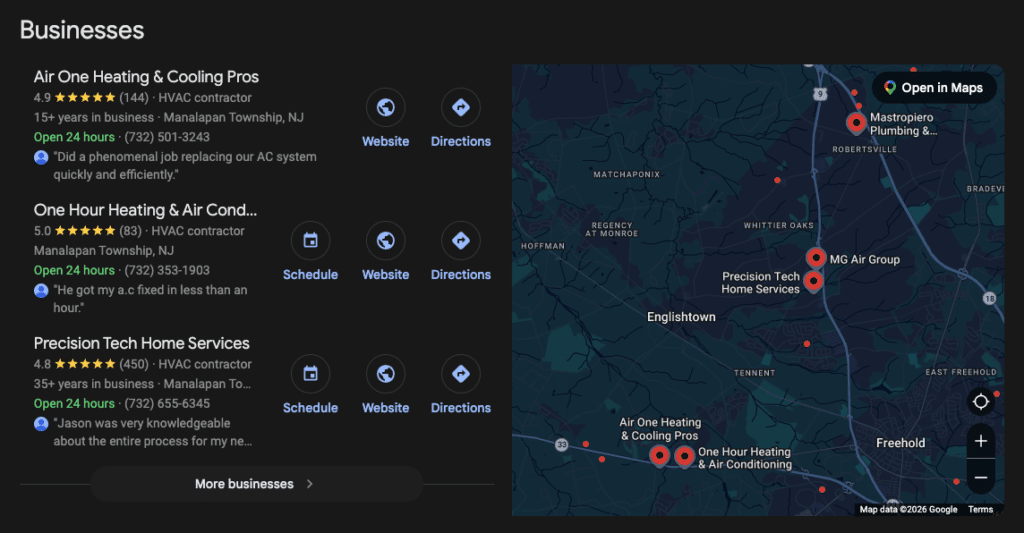
This map pack screenshot represents the goal for local businesses. When your Schema is correct, Google can confidently place you at the top of local results because it knows your address, phone number, and reviews are accurate. Most people get the technical side wrong because they rely on basic plugins that create code bloat. This is usually the point where the debate between hiring an agency or going DIY for ecommerce gets real. If your site is complex, you need someone who knows how to write clean code that a machine can actually read. You can see how we handle these complex builds by hard-coding authority through technical SEO.
5 Schema types you actually need
- Organization: Defines your brand name, logo, and social profiles.
- LocalBusiness: Tells Google your address, phone number, and hours.
- Service: Lists exactly what you do and what it costs.
- FAQ: Gives AI direct answers to common customer questions.
- Product: Shows stock levels and prices in the search results.
FAQs About Schema Markup
Is your business machine-readable?
If you are only writing for humans, you are missing half the equation. You need to be visible to the AI models that now control the revenue flow. Book a 20-minute call with Echo & Scale to see how our SEO and GEO services can fix your entity health. You can also look at how our process works to see how we build technical roadmaps that actually get results.
Book Your Free Call Today
Schedule your Free 20 minute call and get a marketing plan specifically tailored to you.